2026-09-03
Copper Mine Drilling Equipment: Rig & Air Selection
A practical framework for matching a copper-mine blast-hole rig, DTH tools and air compressor to the geology, altitude and production plan.
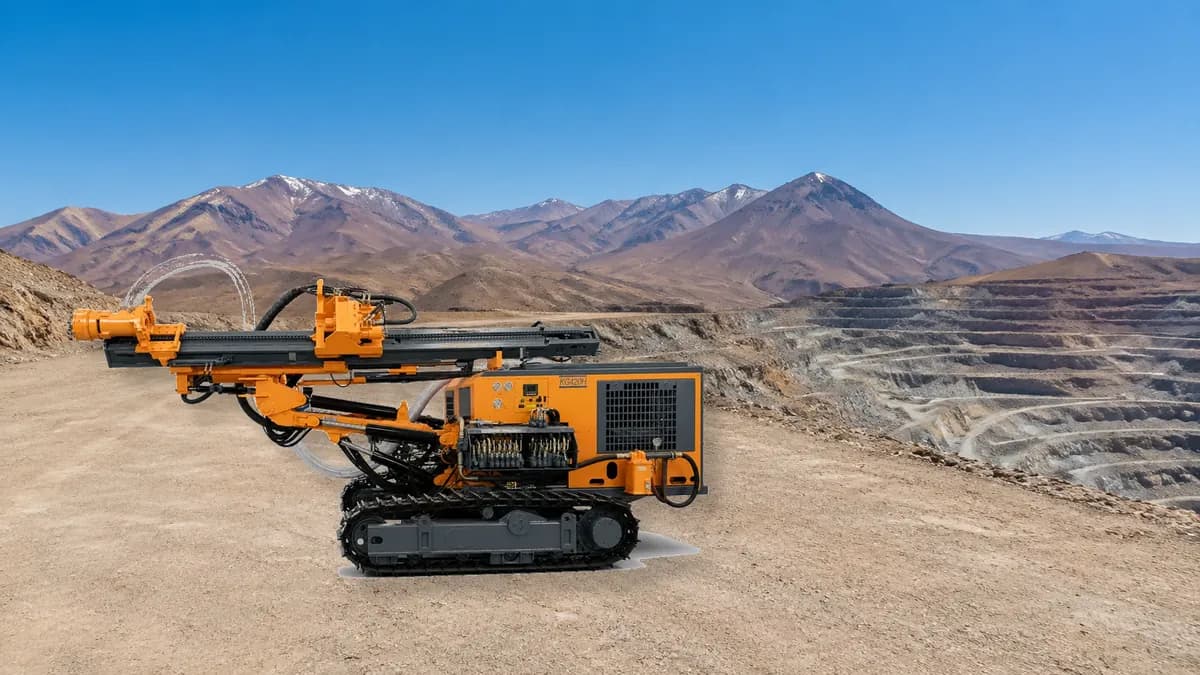
By: Hangzhou Kaishan Machinery Co., Ltd.
Technical review: This is a selection framework. Final rig, hammer and compressor sizing must be confirmed against the hole plan, geology and site conditions.
Scope: This guide supports equipment selection; final configuration depends on the project conditions provided in an inquiry.
Copper matters to expanding power networks, renewable-energy systems, electric transport and industrial electrification. The International Energy Agency’s Global Critical Minerals Outlook 2025 identifies copper as a material facing continuing demand pressure as grids and energy technologies expand.
For a mine operator or drilling contractor, that market context does not change the practical decision on the bench: how can the ore body be drilled accurately, safely and at a competitive cost per metre? The answer does not start with the largest rig in a brochure. It starts with the holes the mine must drill.
1. Treat drilling as part of the mine’s full cost chain
In an open-pit operation, blast-hole drilling sits inside a repeating cycle:
bench preparation → drilling → charging → blasting → loading → hauling → crushing
A hole that is off-depth, poorly cleaned or badly aligned can affect fragmentation and create costs after the rig leaves the bench. That is why a purchase price alone is a weak comparison point. A more useful operating measure is:
Drilling cost per metre = total drilling operating cost ÷ productive metres drilled
The numerator normally includes fuel or electricity, labour, bit and hammer wear, drill pipe, lubrication, maintenance, compressor operation, depreciation and downtime. The denominator should be productive, accepted metres—not simply engine hours.
2. Start with a drilling brief, not a model name
Before asking for a rig recommendation, assemble one site brief with the following information:
| Area | Information to confirm |
|---|---|
| Hole plan | Diameter range, depth, vertical or inclined holes, bench height and sub-drilling |
| Geology | Rock type, hardness, abrasiveness, fractures and water conditions |
| Production | Target metres per shift, shifts per day, annual drilling volume and pattern spacing |
| Site | Mine elevation, ambient temperature, road/bench condition and fuel or power availability |
| Existing fleet | Current rig, hammer, bit, compressor, penetration rate and the operating problem to solve |
| Support | Local service capability, spare-parts access and transport constraints |
This brief turns a generic equipment inquiry into an engineering comparison. It also prevents a common mistake: selecting an air compressor before the hammer and hole diameter have been defined.
3. Choose the drilling method for the production target
Open-pit copper mines can use several methods at different project stages. Exploration programs may use core, reverse-circulation or other geological methods. Production drilling is usually judged by blast-hole capacity, hole quality and cycle time.
Two common production approaches are compared below.
| Selection factor | DTH drilling | Large rotary / rotary-percussive drilling |
|---|---|---|
| Energy at the bit | Hammer works directly behind the bit | Depends on the rotary system and rock conditions |
| Typical strength | Efficient hard-rock drilling and flexible deployment | High-volume drilling on large, established operations |
| Mobility and infrastructure | Often easier to mobilise with a crawler rig and matched air package | Usually needs a larger machine, support plan and transport arrangement |
| Capital and maintenance | Can be a more manageable entry point for contractors and mid-scale mines | Higher investment and more complex support may be justified at scale |
| Decision driver | Hole plan, rock and compressor match | Annual metres, hole size and large-mine production capacity |
DTH is not automatically superior to rotary drilling. For a large operation with a stable, high-volume drilling program, a rotary fleet may be the right answer. For contractors, developing mines and many medium-scale surface operations, a DTH package can offer a practical balance of hard-rock performance, mobility and maintainability.
4. Follow the right sizing sequence
The system should normally be sized in this order:
hole diameter → hammer and bit → pressure/airflow requirement → compressor → drill pipe → rig
Hole diameter and depth
Diameter drives the hammer class, drill pipe, feed and air demand. A 90–115 mm bench-hole program is not the same job as a 140–165 mm program. Larger holes generally require a larger hammer, higher air consumption, stronger feed and rotation capacity, and a compatible drill string.
Depth still matters even on relatively shallow production benches. Confirm the bench height, required sub-drilling and rod configuration before selecting the feed length and mast arrangement. Hole inclination and collar accuracy should be included where the blast design calls for them.
Rock condition
“Copper mine” is not a geological specification. Copper deposits occur in different rock types and can vary across one pit. Hardness, abrasiveness, fracture condition and groundwater influence penetration rate, bit life, hammer wear and cost per metre. Supply the actual geotechnical information where available; it is more useful than choosing equipment from the commodity name alone.
5. The air compressor is part of the drilling system
A DTH rig, drill pipe, hammer, bit and compressor operate as one air-and-drilling system. If the air package is undersized, the consequences can include weak hole cleaning, reduced hammer performance, slower penetration and cuttings accumulation. An oversized compressor can add avoidable acquisition, fuel and transport cost.
The target is not “the biggest compressor.” It is the right pressure and airflow at the hammer.
- Working pressure is commonly stated in bar or psi. It must meet the hammer’s operating requirement.
- Airflow is commonly stated in m³/min or CFM. It powers the hammer and carries cuttings out of the borehole.
Air demand changes with hole diameter, hammer size, drill-pipe diameter, depth, formation and elevation. “We need a 25 bar compressor” is therefore incomplete. A usable request is more like: “We drill 140 mm vertical holes to 18 m in hard rock at 3,500 m elevation.”
Browse the relevant surface DTH rigs, mobile air compressors and DTH tools only after that operating envelope is clear.
6. Include altitude and power infrastructure early
High-elevation mines require a specific review of engine and compressor performance. Lower air density can influence engine output, cooling margin and effective compressed-air delivery. A package that performs well near sea level should not be assumed to perform identically at an Andean mine site. State the elevation in metres above sea level when requesting a proposal so the supplier can assess the configuration rather than relying on nameplate output alone.
The site’s energy infrastructure also matters:
- Diesel portable compressors suit remote benches, exploration areas and contractors who need independent mobility.
- Electric compressors can be attractive where dependable power is available, the position is relatively fixed and the mine is evaluating diesel use and operating cost.
Neither drive type is a universal default. Compare actual energy availability, relocation frequency, power quality, maintenance support and the expected duty cycle.
7. Compare availability, not peak specifications
A technically advanced rig can still be an expensive choice if parts, trained technicians or diagnostic support are unavailable at the mine. In remote operations, consistent output from a serviceable machine may be more valuable than a higher paper specification that produces long downtime.
Ask each supplier to address these operating questions:
- What penetration rate is realistic for this rock and hole plan—not a generic maximum?
- Which hammer, bit and drill pipe are included in the proposed configuration?
- What pressure and free-air delivery are available at the stated altitude?
- What are the expected consumables and maintenance intervals?
- Which critical spare parts should be held on site?
- Who can support the equipment locally, and what is the escalation path?
The best equipment comparison is a complete operating scenario, not an isolated rig quotation.
A practical decision rule
For a hypothetical open-pit copper operation drilling 140 mm holes to 15–20 m in hard rock at high elevation, the selection team should first validate the hammer, bit, pressure and airflow requirement; then check altitude correction, drill-pipe arrangement, rig feed/rotation capacity, expected metres per shift and consumable plan. Only then should it compare specific equipment configurations and cost per metre.
This sequence reduces the risk of buying a powerful machine that is poorly matched to the real drilling task.
Planning a new copper-mine program or replacing an existing drill-and-air package? Send the hole diameter, depth, rock description, mine elevation, production target and current equipment through our Request a Quote page. We will assess suitable Kaishan drilling and compressed-air configurations for the information provided.
References and scope
| Reference | How it is used |
|---|---|
| International Energy Agency, Global Critical Minerals Outlook 2025 | Industry context on copper, grids and energy technologies |
| Kaishan surface drilling, compressor and DTH-tool product ranges | Product-line context only; final model selection requires project-specific confirmation |
| This article | General selection guidance, not a site-specific drilling design or performance guarantee |
Need help matching equipment to your project?
Send us your working conditions and we will confirm the configuration within 24 hours.